Sir Henry Baskerville
The Hound of the BaskervillesSir Henry Baskerville is the young baronet whose return to his family home sets the inheritance plot in motion. The last representative of the Baskervilles, he faces both a family legend of supernatural danger and the possibility of human hostility. His inheritance makes him the focus of a desperate contest, while his pride, romantic hopes, and willingness to take risks complicate the efforts to protect him.
Identity and Inheritance
Sir Henry inherits the title and estate after the death of his uncle, Sir Charles Baskerville. The scale of what is at stake emerges when Holmes learns that the estate is worth close to a million pounds. If Sir Henry were to die, the estate would pass to the Desmonds, distant cousins, because the land is entailed; the money would also pass to the next heir unless its current owner made a different provision by will.
Sir Henry has not yet made a will, having learned only the previous day how matters stood. He nevertheless has a clear view of how the inheritance should be kept together: he believes the money should accompany the title and property, so that the owner can maintain the estate and restore the family’s standing. His concern is thus not only for personal wealth but for the resources required to sustain the house and land attached to his name.
Choosing to Return
When asked whether he fears the family’s supernatural enemy or human beings, Sir Henry replies that the distinction does not alter his decision. He insists that neither a devil nor a man will stop him from going to the home of his own people. The flush in his face and knitted brows mark the force of his temper, which the narration presents as characteristic of the Baskervilles and still alive in their last representative.
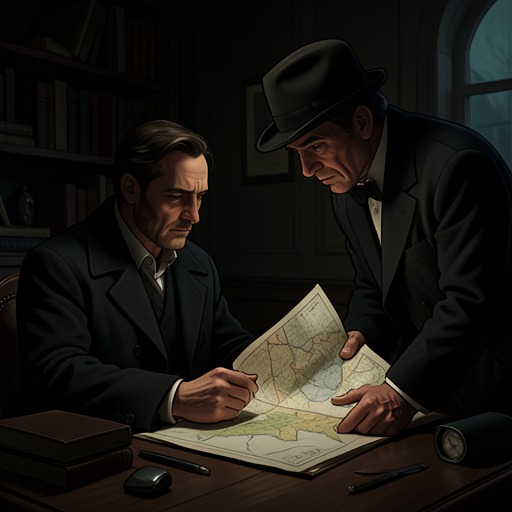
His resolve does not mean he makes the decision without reflection. At first, he asks for a quiet hour to consider what he has heard and proposes that Holmes and Dr. Watson join him for lunch, when he can explain more clearly what he thinks. Afterward, however, Holmes advises that he travel to Devonshire without delay, on the condition that he not go alone. When Holmes offers Dr. Watson as a companion, Sir Henry seizes his hand and welcomes the offer with evident gratitude, asking him to come to Baskerville Hall and see him through the danger.
Attachment and Conflict with Stapleton
At Baskerville Hall, Sir Henry becomes attached to Beryl Stapleton. He struggles to understand why Stapleton objects to him as a suitor: Sir Henry doubts that his social position can be the reason and asks Watson whether anything about him would make him an unsuitable husband to a woman he loves. He protests that, as far as he knows, he has never harmed anyone. The rejection stings not only because it frustrates his hopes, but because he cannot identify what he has done to provoke it.
Stapleton later gives an apology and explains his earlier opposition as the result of a shock at the thought of losing the woman he describes as his sister and longtime companion. As Sir Henry relates the explanation, Stapleton acknowledges that he had been selfish to imagine he could keep her to himself for life. He asks Sir Henry to let the matter rest for three months, cultivating her friendship without claiming her love in the meantime. Sir Henry agrees. The arrangement temporarily suspends his courtship, leaving him to accept a delay imposed by the man who has opposed it.
Independence and Exposure
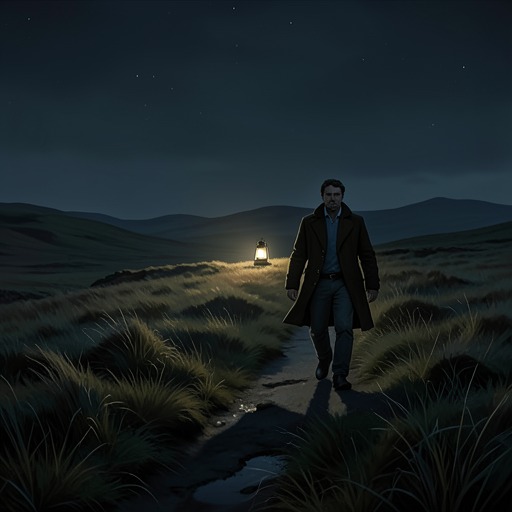
Sir Henry’s determination to act for himself repeatedly conflicts with the precautions set around him. When Watson reminds him that Holmes insisted he should not go alone onto the moor, Sir Henry answers that events since his arrival have changed the situation and says he must go out alone. He takes up his cane and leaves before Watson can decide how to stop him. Watson, troubled by the thought of having let him out of sight, sets off after him toward Merripit House.
Later, Sir Henry honors his promise not to go about alone, despite spending the day at home and wishing for a more lively evening. He has received an invitation from Stapleton, but the disclosure makes plain how vulnerable he remains: Holmes tells him that the others had feared he had broken his neck. When Holmes subsequently instructs him to trust him implicitly and to tell his hosts that urgent business requires a return to town, Sir Henry is reluctant. He had hoped Holmes would stay with him, since neither the Hall nor the moor is pleasant in solitude, but accepts that there is no alternative. His willingness to follow the instruction contrasts with his earlier insistence on going out alone; protection demands a degree of obedience that does not come easily to him.
The Hound and His Survival
Holmes withholds the truth about the hound’s role in Selden’s death so that Sir Henry will believe the account Stapleton wants him to accept and retain his nerve for the next day’s dinner. The danger becomes immediate when the hound attacks him. Sir Henry is thrown to the ground, and the beast worries at his throat before Holmes empties five revolver shots into it. The hound dies, and Dr. Watson and the others find Sir Henry unconscious where he fell.
They tear away his collar and find no sign of a wound; the rescue has come in time. Sir Henry’s frightened eyes open as he begins to stir, but the episode leaves the central contrast exposed: the family ghost is a mortal animal, while its victim is a living man who has survived the attack. His rescue ends the immediate threat to his life, though the evidence here does not describe his subsequent recovery. Across the episode, Sir Henry is neither simply a fearless heir nor a passive object of protection: he asserts his claim to face danger, pursues a love he cannot understand being denied, and ultimately depends on others to keep him alive.